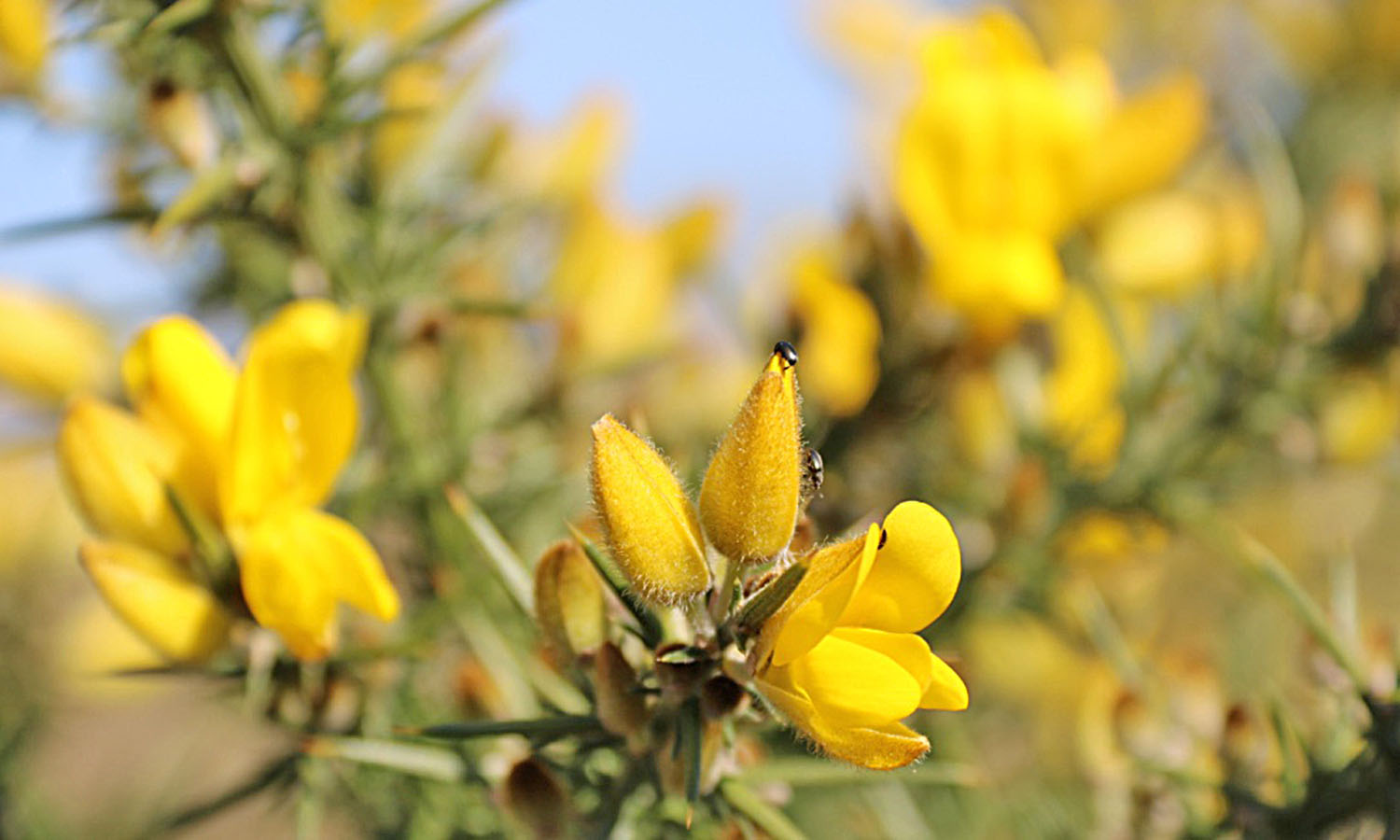
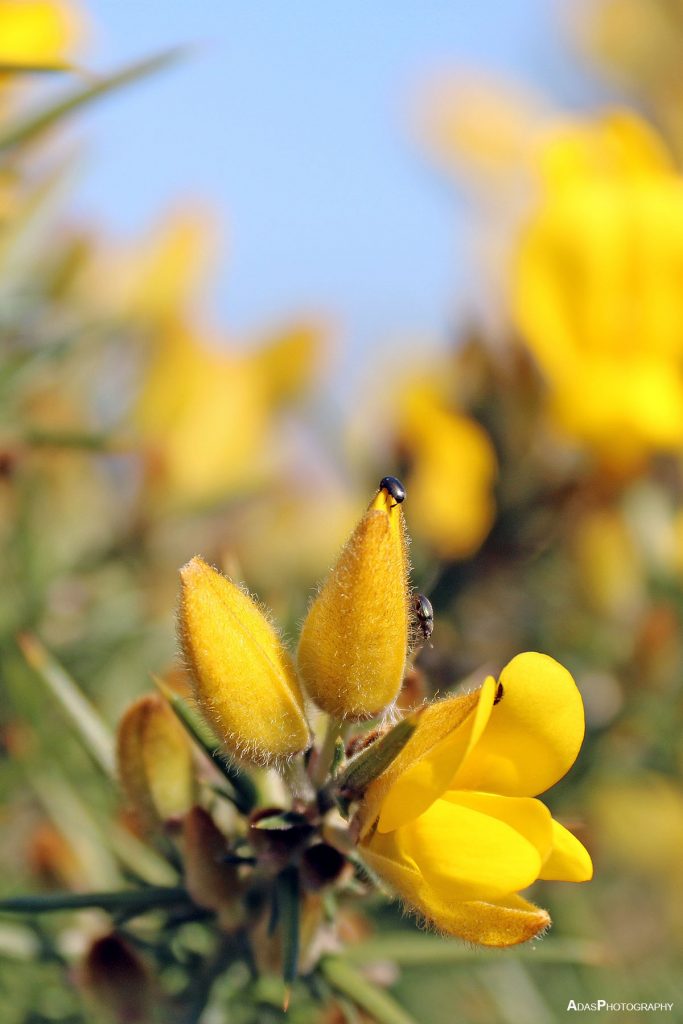
When I had a smooth walked a couple days ago in the nature I found this magnificent wild yellow flowers called Ulex or commonly known as Gorse, Furze or Whin. I patiently captured these brightest flowers that had a spiky leaves without making any wheezing sounds; gratefully I didn’t disturb those tiny creatures that crawling on it. Gorse is a valuable plant for wildlife as its providing dense thorny cover ideal for protecting bird nests. Gorse has been introduced to some areas of Europe and also to the Americas, New Zealand, South Africa and Australia, which they considered it as a weed that cause a serious problem invasive species in other areas mostly in the western United States, Chile and New Zealand.
Gorse described as evergreen shrub that can growing up to 2 till 3 metres (7-10 feet) tall. It has a taproot, lateral and peril roots. An extremely strong and cynical plant, it survives temperatures down to -20 °C (−4 °F) and it seeds remain doable up to 30 years.
Interesting part about Gorse, as like many other species, it is a fire-climax plant, which readily catches fire but re-grows from the roots after the fire. This is the reason why it was once extremely important to people living in the Irish countryside. It was often provided excellent fuel for cooking and often used for thatching roofs. Gorse is a highly nutritious source of food for livestock and was widely once used to feed horse and cattle.
According to a book called ‘Farming in Ireland’, by John Feehan. Mr. Feehan noted in his book that there are many registered accounts in legal documents from the 15th and 16th century, that lists gorse being used as fodder for cattle and horses.
Gorse also can be used in salads, tea and to make a non-grape based fruit wine. In term of medicine, Gorse flowers have been used in the treatment of jaundice, scarlet fever, diarrhoea and kidney stones. The seeds can be soaked and used as a flea repellent. Be careful when taking any herbal medicine, as it can be a hazard if it overeats. This plant contains slightly toxic alkaloids, taking only when it is necessary and don’t forget to consult to the herbalist first as they know best.
Things that you need to know before pick and eat them.
What to eat: Flower buds
Cleaning and storing: Remove all twigs, spines and bugs before using. Gorse flowers do not store well so use them as soon as you get home.
Cooking: Gorse flowers are high in protein and can eaten raw in salads, made into fruit tea, cordial or syrup. It adds extra flavour and colour to beer, wine or spirits, and a whole range of sweet delights like chocolate and ice cream. The buds can be pickled in vinegar and eaten like capers.
Medicinal uses: Gorse had surprisingly few medicinal uses, though its flowers have been used in the treatment of jaundice, scarlet fever, diarrhoea and kidney stones.
Other uses: The seeds can be soaked and used as a flea repellent.
Know hazards: The scary spiky spines that like to inflict as much pain as possible on anyone trying steal their blossoms. Arm yourself with thick gloves and harvest slowly and carefully.
P/S: Always take care when taking herbs.